
The Battle Room Tactical Revolution
Ender's GameShows how Ender's innovations in zero-gravity combat transformed Battle School doctrine and prepared him for real fleet command.
increasing Bearing strength in each event
 decreasing
Bearing strength in each eventdecreasingFirst Taste of Null Gravity
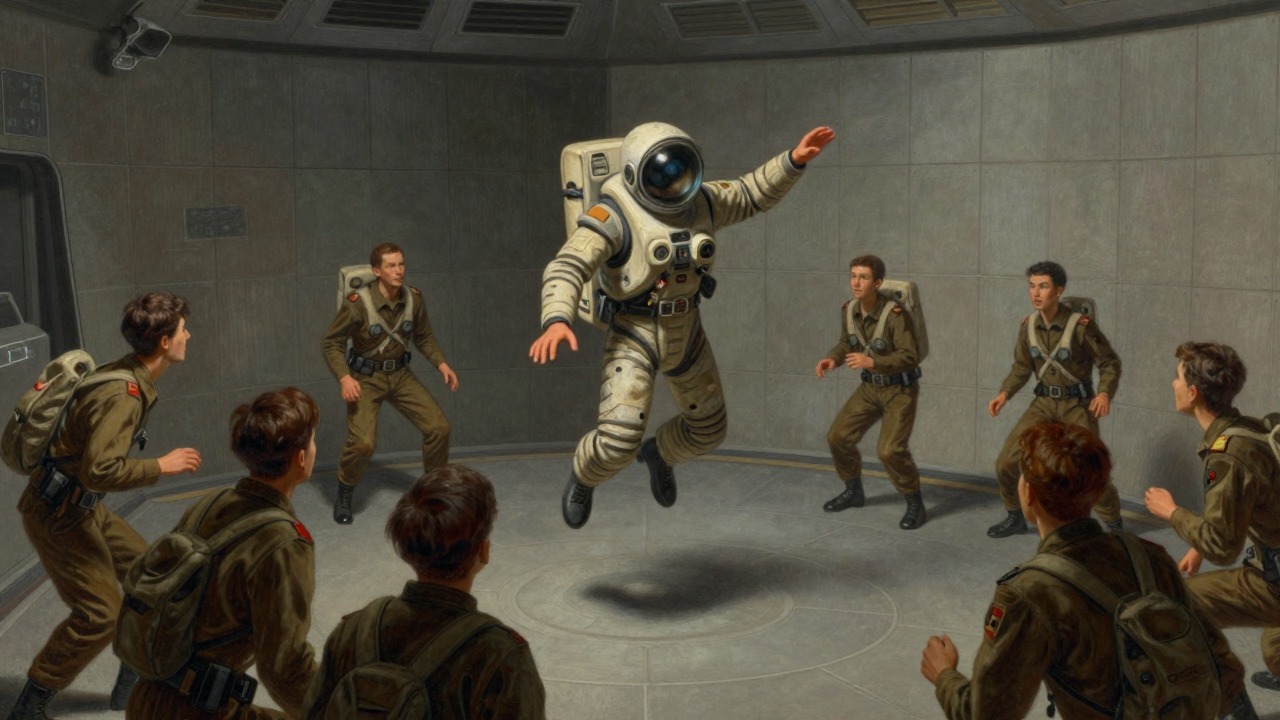
First Taste of Null Gravity
Ender enters the Battle Room with his launch group and immediately experiments with orientation and movement. He learns to control his rebound from walls and catches Alai's attention.
Context
The Battle Room is designed to train soldiers for three-dimensional warfare, and most Launchies cling to the walls in fear. Ender's willingness to experiment makes him an early leader.
Significance
This first practice plants the seeds of the 'enemy's gate is down' insight, the core tactical principle that will define Ender's later battles.
The Enemy's Gate is Down
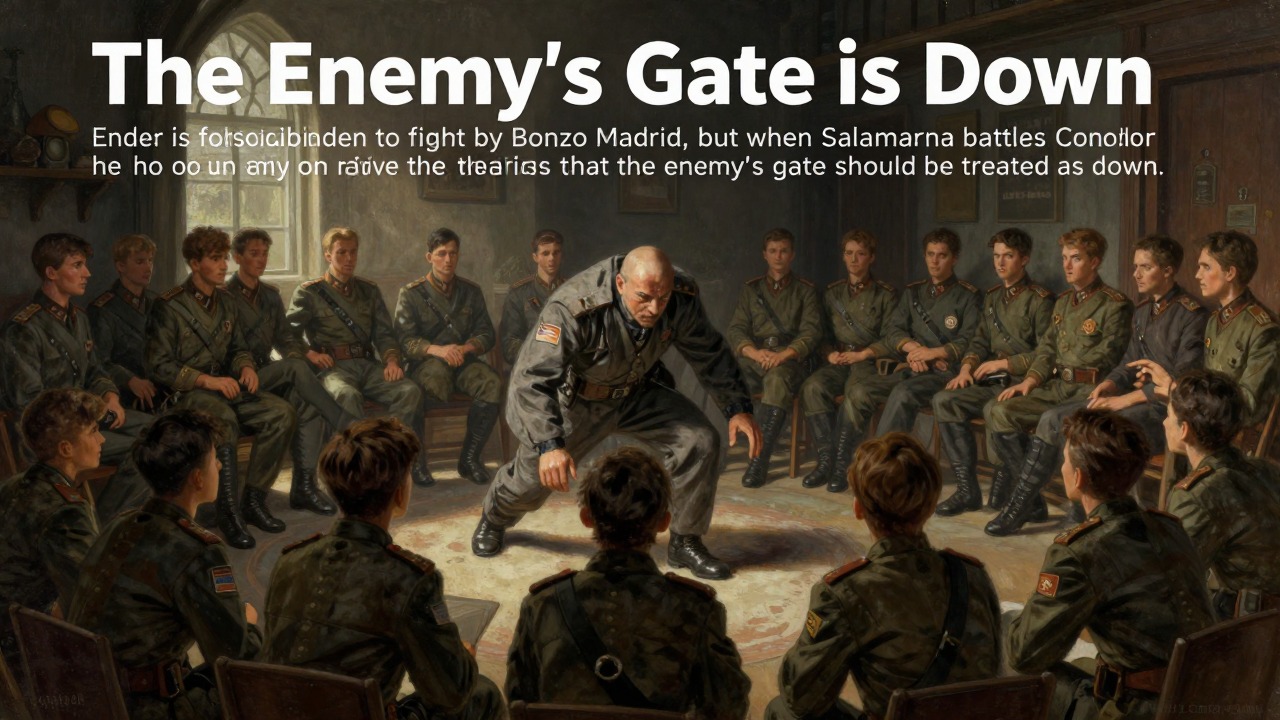
The Enemy's Gate is Down
Ender is forbidden to fight by Bonzo Madrid, but when Salamander battles Condor Army he drifts into the room and realizes that the enemy's gate should be treated as down. He orients himself and is only damaged, not eliminated.
Context
Most Battle School commanders still think in corridor gravity, but Ender sees that null-g is a matter of chosen orientation. This perspective gives him a smaller target and a clearer attack path.
Significance
The phrase becomes the unofficial motto of Ender's style of war: every battle is a fall toward the enemy's home, and every strategy must be built from that truth.
Training with Dink Meeker
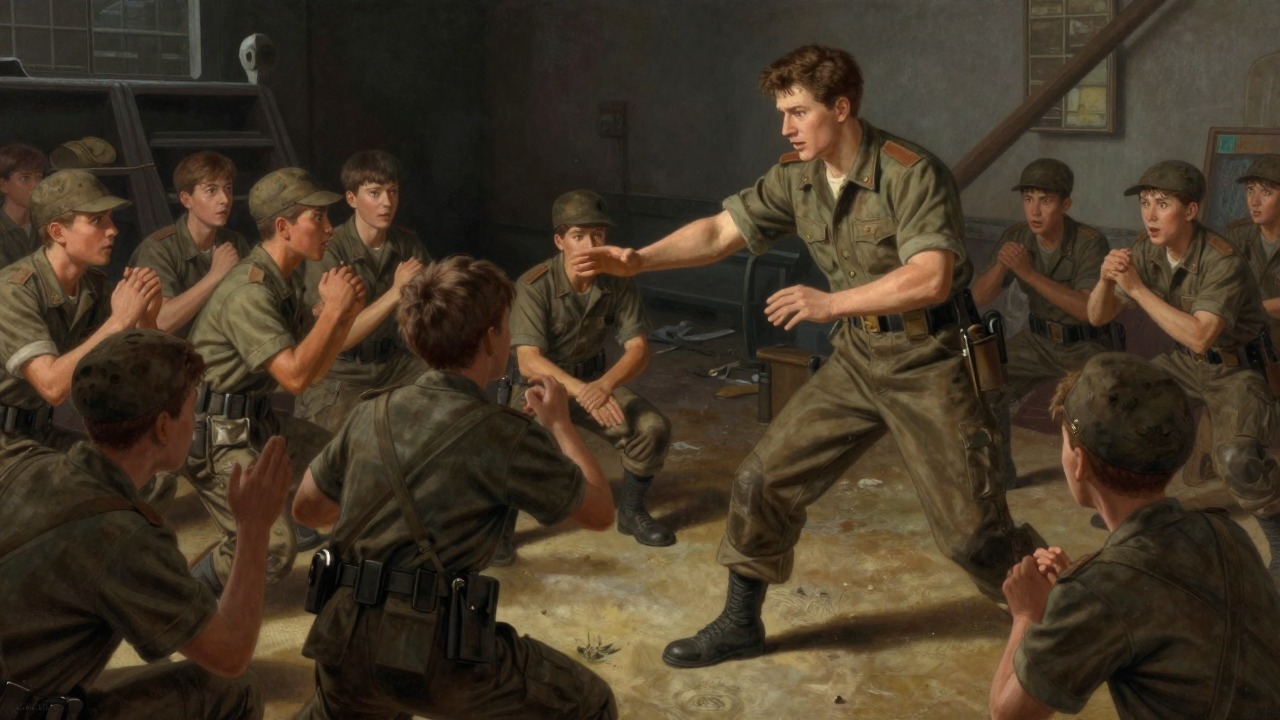
Training with Dink Meeker
Dink Meeker becomes Ender's toon leader and trains his soldiers to use legs-first attacks. Ender contributes the enemy's-gate-down orientation and helps Dink's toon become the most innovative unit in Rat Army.
Context
Dink is the first teacher Ender truly respects, and he exposes Ender to a deeper suspicion of the Battle School's purpose. Their relationship is both tactical and philosophical.
Significance
Dink's skepticism pushes Ender to think about the game as an artificial construction, preparing Ender for the later revelation that the 'game' of Command School is actually real war.
Five-Toon Doctrine
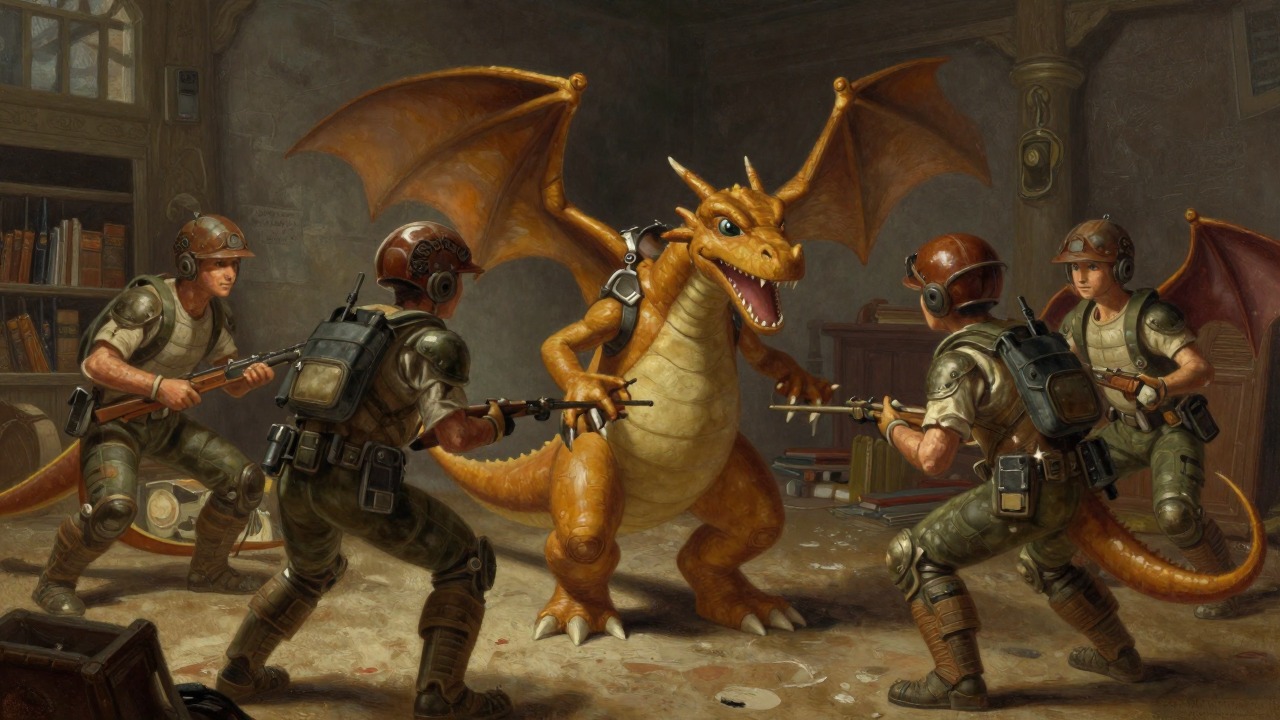
Five-Toon Doctrine
Ender splits Dragon Army into five toons of eight instead of four of ten, giving him extra tactical flexibility. He trains the toon leaders to operate independently while still following his larger plan.
Context
The standard Battle School structure is rigid and predictable. Ender's five-toon organization allows him to hit the enemy from unexpected directions and adapt quickly to changing situations.
Significance
This reform changes Battle School's tactical landscape and makes Dragon Army nearly unbeatable, but it also makes Ender a target for the teachers' increasingly unfair experiments.
The Whole School Copies
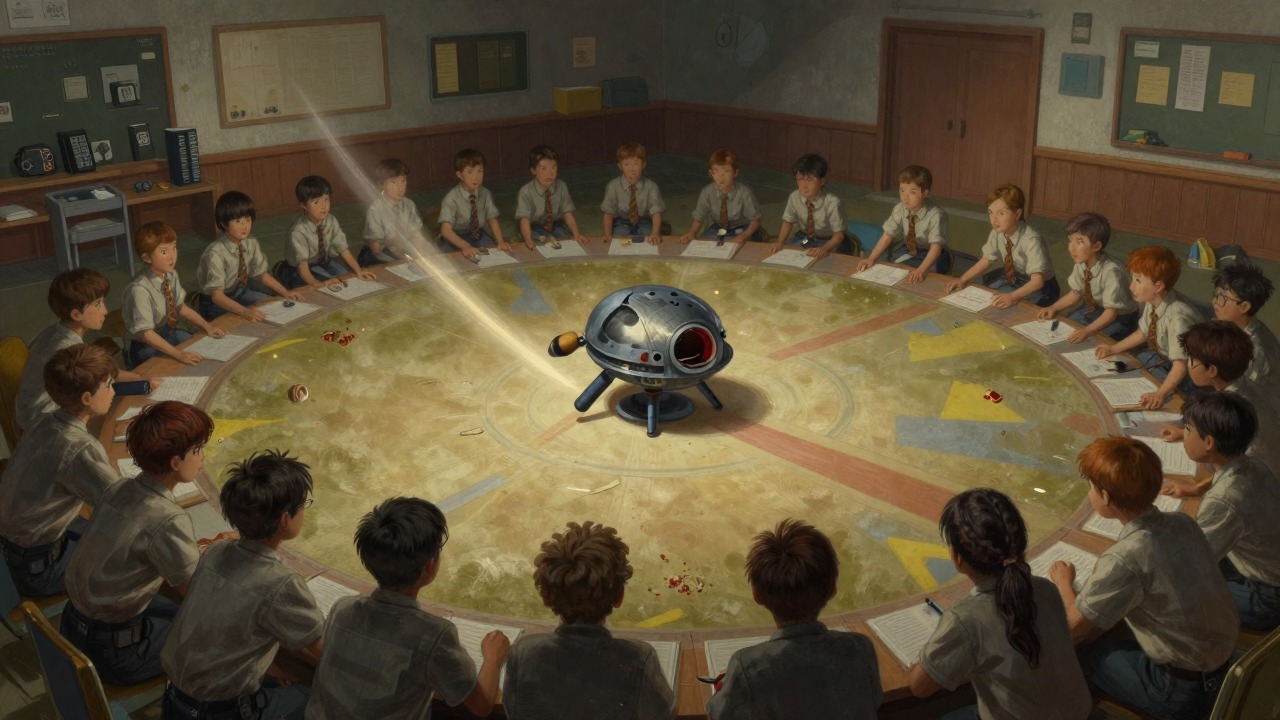
The Whole School Copies
After Dragon Army wins seven battles in seven days, other armies begin copying Ender's legs-first attacks, wall-sliding, and flexible formations. The game changes across Battle School.
Context
Ender has exposed the weaknesses of the old style and made improvisation the new standard. Commanders study his videos and try to learn from his enemies' failures.
Significance
The tactical revolution ensures that even after Dragon Army is dismantled, Ender's ideas survive in the school and in the students who will later become his squadron leaders in the real war.
Ender's first practice in the Battle Room
during Ender's first real battle with Salamander Army
during Ender's tour in Rat Army
Ender's first weeks as Dragon commander
during Dragon Army's streak of seven victories
